Forgetting to put "#PR" on a sponsored post would be an incident.
That much, I think, has sunk in on both sides — the people posting and the people commissioning the posts.
Even from where I stand, having worked around advertising for years, disclosure had started to look like a topic that no longer needs special care.
Then, on October 20, 2026, the Consumer Affairs Agency of Japan issued a cease-and-desist order.
What it called into question was not the posts themselves.
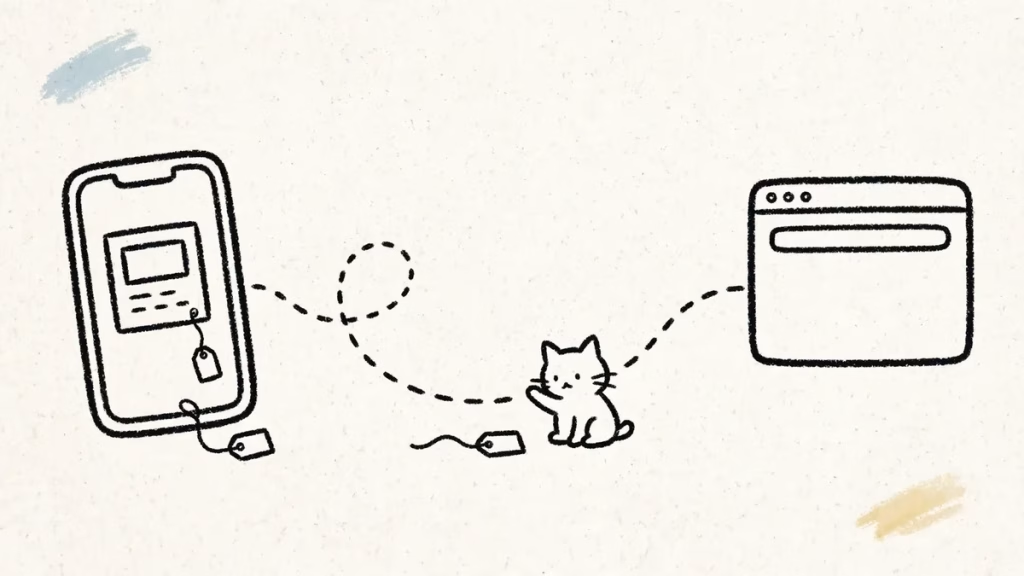
It was the act of reposting those commissioned Instagram posts onto the company's own website.
Disclosure practice had moved forward, and the accident happened not when posts were published, but when they were reused.
What the Order Says…
The company is giobai Co., Ltd., seller of the "FLEURISTE" futon dryer (including its dedicated aroma cartridges).
The order lists two violations.
The main one for this article is the violation of Japan's stealth marketing notice.
According to the agency's published materials, giobai asked third parties to post on Instagram in exchange for free products or payment, then took excerpts of those post images and placed them on its own website.
The section headings were "User's Voice" and "A Big Hit on Social Media, Too."
You see sections like this on landing pages for all kinds of products.
The display ran from July 11 to December 6, 2024.
What was missing was any indication that the posts had been commissioned.
The words and photos were genuine, and the original posts may well have carried proper disclosure.
But nothing on the page they were reposted to told visitors that the posts existed because the company had asked for them.
The agency judged the display to be one where ordinary consumers would have difficulty telling it was the business's own advertising, and found it in violation of the notice.
The order requires the company to publicize the violation to consumers, to put recurrence-prevention measures in place and make them known to officers and employees, and to refrain from similar displays in the future.
The other violation, for the record, was a misleading representation of quality: claims about mite control and sterilization effects were presented as significantly better than reality, without reasonable grounds.
That is not the subject of this article, so I will leave it at the fact that it was found alongside.
Disclosure Has Become Thorough — on the Posting Side
Japan's stealth marketing rules took effect on October 1, 2023.
The Cabinet Office notice covers displays made by a business that ordinary consumers find difficult to identify as the business's own.
Three years on, the etiquette has at least settled into place where posts are published.
In influencer campaigns, disclosure items on request documents and checklists are no longer unusual.
In affiliate marketing, the thinking has spread beyond a blanket "this site contains promotions" at the top of the page, toward making each individual display recognizable as advertising nearby.
The agency's Q&A goes into details such as whether a disclosure is seen by someone who starts watching a video halfway through.
Readers have grown used to it, too — a blatant promotional post with no disclosure now stands out, if anything.
Honestly, I had filed disclosure away as an area that no longer needed much caution.
What snagged me about this case is why an accident still happened under rules that were supposed to have matured.
The answer is simple.
The etiquette only ever covered the act of posting.
It never reached the process that decides what happens to a post afterwards.
A Reposted Post Is Treated as a New Display
Reposting is tricky because the unit of judgment moves from the original post to the page it lands on.
A stealth marketing judgment roughly splits in two.
Is the display the business's own display, and can ordinary consumers tell that it is?
The original Instagram post may have been published on the creator's own account, with proper disclosure.
The moment it is cut out and rearranged on the company's website, the business is the one making the display.
The business chose it, the business decided how much of it to excerpt, and the business wrote the heading around it.
The creator's account, the surrounding context, and the original disclosure can all fall away for cropping or layout reasons — all the more easily if the disclosure sat in a corner of the image.
In other words, the reposted display is not a copy of the original post.
It is judged as a display newly created by the business, across the whole destination page.
Having disclosed properly on the original post does not justify the reposted version.
This way of thinking was already visible in the agency's Q&A.
Asked about placing influencer posts that qualify as a business's display in a "Customer Voices" section on the company's own website, the agency answers that doing so is "not appropriate."
If such posts are to be published, it says, they must be shown in a form where visitors can clearly tell they were commissioned by the company.
Reference: Consumer Affairs Agency, "Q&A on Stealth Marketing" (in Japanese)
Here is the disconnect between disclosure culture and production culture.
In the workflow that publishes posts, the watchword is "make the relationship visible."
In the workflow that builds product pages, the watchword is "take good material and arrange it neatly."
An image handed over as material does not come with the circumstances of how it was commissioned.
What doesn't come with it, falls off.
The Conditions and Exceptions Are Written Down, and Yet…
It is not that no criteria exist.
Take the case of quoting survey responses as "Customer Voices."
The agency's Q&A says that if responses are selected at random, without arbitrary cherry-picking, and quoted verbatim without changes, the quotation does not count as the business's own display.
Conversely, picking only favorable evaluations, or taking only the "good points" from a response that lists both good and bad points, does count as the business's display — and without making that clear, it violates the notice.
No particular wording is prescribed.
"Ad," "PR," or a sentence like "Posted with products provided by Company A" all work, as long as the display as a whole makes it clear.
The conditions and exceptions are written down.
And yet, my honest impression is that in practice it is hard to draw a line and say "beyond this point is a violation."
The reason is that none of the material you would judge by is attached to the asset itself.
There are three main reasons the line resists drawing.
First, the unit of judgment is the whole display, not the post.
The same post image is evaluated differently depending on whether the heading says "User's Voice" or "Posts We Commissioned."
The order of arrangement, the range excerpted, and the copy placed nearby all enter the judgment, so there is no way to certify individual asset files as "safe" one by one.
Second, whether a post was made of the creator's own volition cannot be seen from the outside.
The Q&A shows cases where free products plus a casual request to share impressions do not immediately make a post the business's display.
And it also shows the opposite: even without instructions about content, the exchanges, the nature and reasons for the consideration, and past or future business relationships can add up to the business being involved in deciding the display's content.
It is not settled by whether the contract said "disclosure required," and the absence of such a clause does not make anyone safe.
When the judgment turns on the depth of a relationship, it does not fit neatly into checklist items.
Third, the exception — not the business's display if you select without bias and quote verbatim — clashes with how product pages are made.
A product page exists precisely to choose good voices, trim them short, and rearrange them for readability.
A "Customer Voices" section that selects at random and runs everything in full barely works as an advertising page at all.
In practice, the range of operations that can satisfy the exception looks quite narrow.
| How the repost is done | Relation to "the business's display" |
|---|---|
| Quote third-party statements without selective cherry-picking or altering their content | May be treated as not the business's display. Whether a post was commissioned is a separate question |
| Select only favorable voices, or excerpt only the good points, and publish them as "Customer Voices" | Counts as the business's display. Without clear disclosure, it can violate the notice |
| Excerpt commissioned influencer posts and publish them as "User's Voice" without showing they were commissioned | The form found to be stealth marketing in this order |
| Publish commissioned posts with the commission made clear near each post | At least less likely to be judged "difficult to identify." The whole display is still judged on headings and excerpting |
The Review Process Also Stops at the Moment of Posting
The published materials do not say who inside the company made this display.
But the division of labor that produces pages like this is easy to imagine.
The advertising or social media team (or an agency) arranges the influencers, the production side receives the published posts as material and cuts and arranges them, and the e-commerce operations side keeps pulling them in and displaying them through a UGC collection tool.
In a workflow divided this way, a disclosure check before publication does not necessarily mean the repost will be reviewed with the same question in mind.
Once the material moves into production or operations, the context recorded at publication may not follow it, and a check such as "can a visitor tell, on the destination page, that this post was commissioned?" may be missed.
The published materials do not establish what review process this company actually used. It is the potential gap between steps that concerns me.
The rules apply to the business involved in deciding the content of the display — the advertiser.
The agency's Q&A is clear that influencers who post on request are not the regulated party.
Not the agency that arranged them, not the production company that cut the images out — the business that published the display carries the responsibility.
Which is exactly why, without a mechanism that carries a post's provenance to the end of the process, a well-meaning page of "popular voices we collected" is all it takes to recreate this display.
I cannot tell from the published materials whether this was intentional or how it happened internally. To me, the case shows how a post's advertising provenance can be lost between steps in a workflow.
Don't Hunt for the Safe Side of the Line — Stop Before You Repost
What can be put in place instead is a check, embedded in the workflow before anything is reposted.
What I would want, at minimum, in practice is roughly this.
You do not have to do them all in order — start by auditing the pages already live.
- Audit existing pages: go through the live "Customer Voices" and "Popular on Social" sections and check the provenance of every post shown. Add provenance checks for reposted material to pre-publication review for new pages, too
- Record each post's provenance: whether it was commissioned, what free products or consideration were involved, and the contracts and correspondence — tied to the post's URL, in a form that survives staff changes
- Carry the relationship with the repost: if you publish a commissioned post, place the fact of the commission, or wording like "Ad" or "PR," near each post on the destination page as well. Do not settle for a blanket notice at the top of the page
- Set rules for excerpting: do not use material whose original disclosure would be cropped away. If you edit to keep only the good points, decide how to present it on the premise that it is the business's display
- Make the frame's name match its contents: keep frames named "Customer Voices" or "User's Voice" for voluntary voices only, and separate commissioned posts into a different frame. Reconsider the design that mixes them
- Check UGC tool intake conditions: if posts are imported automatically, verify how selection and display work on the assumption that commissioned posts will be mixed in. Never assume "the tool displays it, so it must be fine"
None of these draws the legal line on your behalf.
They are there so that when an asset feels questionable, you can ask the question in reverse: "Does this look like a third party's voluntary voice?"
If it snags on that question, do not present it as a voluntary voice.
Publish it in a form recognizable as the business's advertising, or do not publish it.
Disclosure is not something you attach to a post once and finish.
It has to keep traveling with the material, all the way to the destination page.
The etiquette that matured was for publishing.
What was called into question was the etiquette of reuse.
That seam exists in any business running influencer campaigns.
Don't use the undrawable line as an excuse — put one check at the seam.
That, to me, is the most practical reading of this order.



Comments