Overview
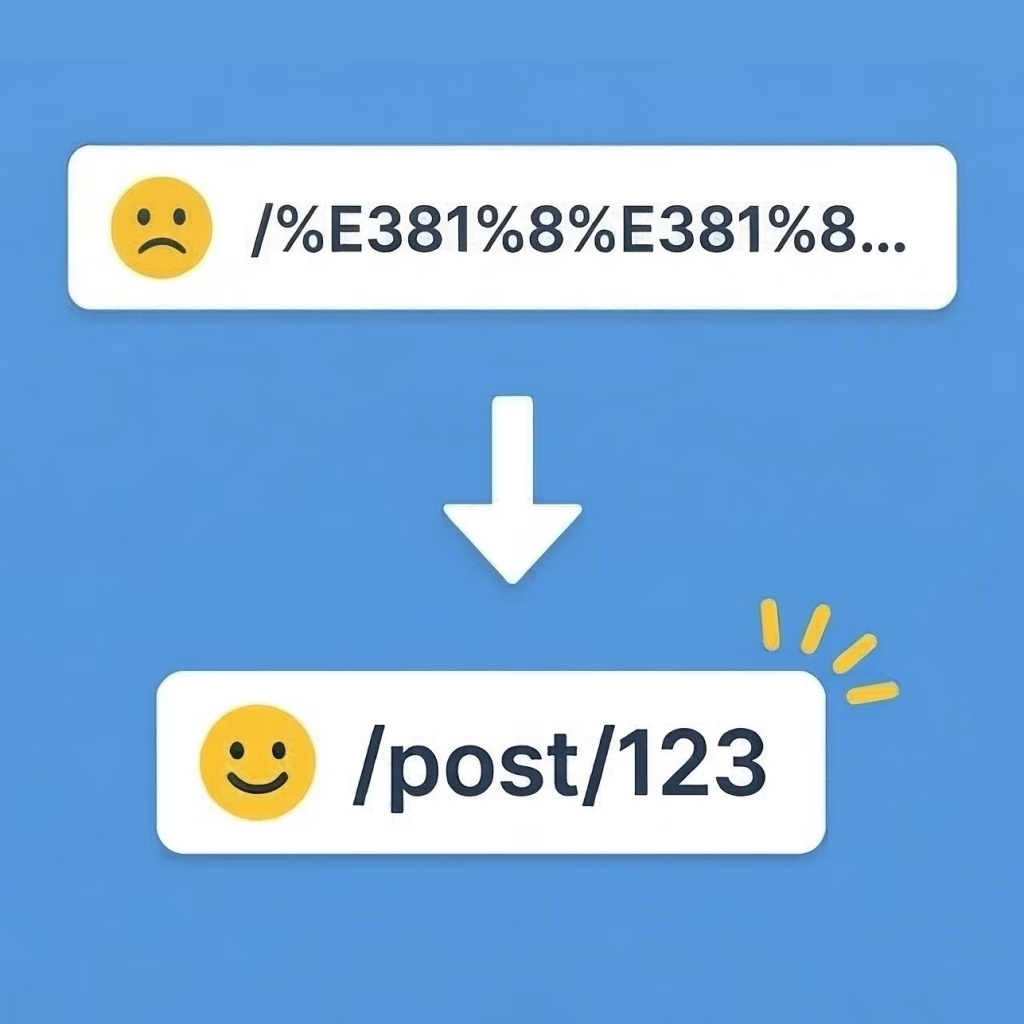
WordPress permalinks can be frustrating, right? Especially on Japanese sites, you might encounter these issues:
- URLs become unnecessarily long
- Encoded strings like
%E3%81%82...that are hard to read - URL management becomes complicated when titles change
That's why I created Slug-Free Permalinks - thinking "wouldn't it be simpler to use ID-based URLs instead of slugs?"

Download page: https://github.com/1008k/slug-free-permalinks
Conclusion
If you're struggling with Japanese URL encoding issues or slug management overhead, this plugin simplifies your URL operations. ID-based URLs make URLs shorter, language-independent, and easier to manage. It's designed for those who want to make WordPress URLs simpler and more manageable.
What Makes It Special
- Selective Application: Only target post types and taxonomies you select in the admin panel, not everything.
- Two URL Formats: Choose between
/post/123/and/post-123/formats to match your site preferences. - Lightweight Design: Avoids unnecessary database queries with WordPress-standard routing and safe-first design.
- Multilingual Support: Preserves language prefixes like
/en/from plugins like Polylang, supporting/en/post/123/format. - Flexible Compatibility: Works with posts, custom post types, and taxonomies for diverse site structures.
What It Can Do
- Post Type ID Conversion: Convert post and custom post type URLs to
/post/123/or/post-123/format - Taxonomy ID Conversion: Convert category, tag, and custom taxonomy URLs to
/category/12/format - Selective Application: Choose target post types and taxonomies from admin interface
- Legacy URL Redirect: Automatic redirect from slug-based to ID-based URLs (only when WordPress can resolve the legacy request)
- Format Selection: Choose between slash-separated and hyphen-separated URL formats
- Language Prefix Preservation: Maintains
/en/language prefixes from plugins like Polylang, supporting/en/post/123/ - Automatic Rewrite Rule Updates: Automatically flushes rewrite rules when settings change
Best Use Cases
Ideal for solving Japanese URL encoding issues or unifying URLs for sites that heavily use custom post types. Also perfect for multilingual sites using Polylang that want to simplify URLs while preserving language prefixes, or blogs and magazine sites looking to reduce slug management overhead.
Things to Note
- Pages Excluded: Pages are intentionally excluded due to hierarchical structures and existing URL design conflicts.
- Avoid Slug Duplication: Using same slugs for post types and taxonomies may cause WordPress rewrite rule conflicts. Using distinct slugs is recommended.
- Redirect Conditions: Legacy URL redirects only work when WordPress can resolve the original request. Not all 404s trigger slug guessing, maintaining performance and reliability.
- System Requirements: Requires WordPress 5.8+ and PHP 7.4+.
How to Use
Download Plugin from GitHub
- Download the ZIP file from the repository's "Code" button
Install Plugin in WordPress
- WordPress Admin → "Plugins" → "Add New" → "Upload Plugin"
- Select and upload the downloaded ZIP file
Activate Plugin
- After installation, activate "Slug-Free Permalinks" from the Plugins screen
Configure Settings
- WordPress Admin → "Settings" → "Slug-Free Permalinks"
- Choose your preferred URL format (
/post/123/or/post-123/) - Check the post types and taxonomies you want to target, then save
That's it - you're all set up!
Summary
WordPress URLs might not get much attention daily, but they actually significantly impact site operations. Slug-Free Permalinks isn't another SEO-hyped plugin - it's for those who want to "make URLs simpler and more manageable".
If you want to reduce slug management and clean up URLs for posts, custom post types, and taxonomies, this might be the perfect choice for you.
Future Plans
I plan to continue with the same basic philosophy, growing in these directions:
- Distribution infrastructure improvements
- Minimal necessary enhancements
- Maintaining lightweight and predictable behavior
Rather than making it complex, I want to keep it as a plugin with clear use cases.
Download: GitHub Repository
Feedback: Feel free to contact me with any feedback! Contact